
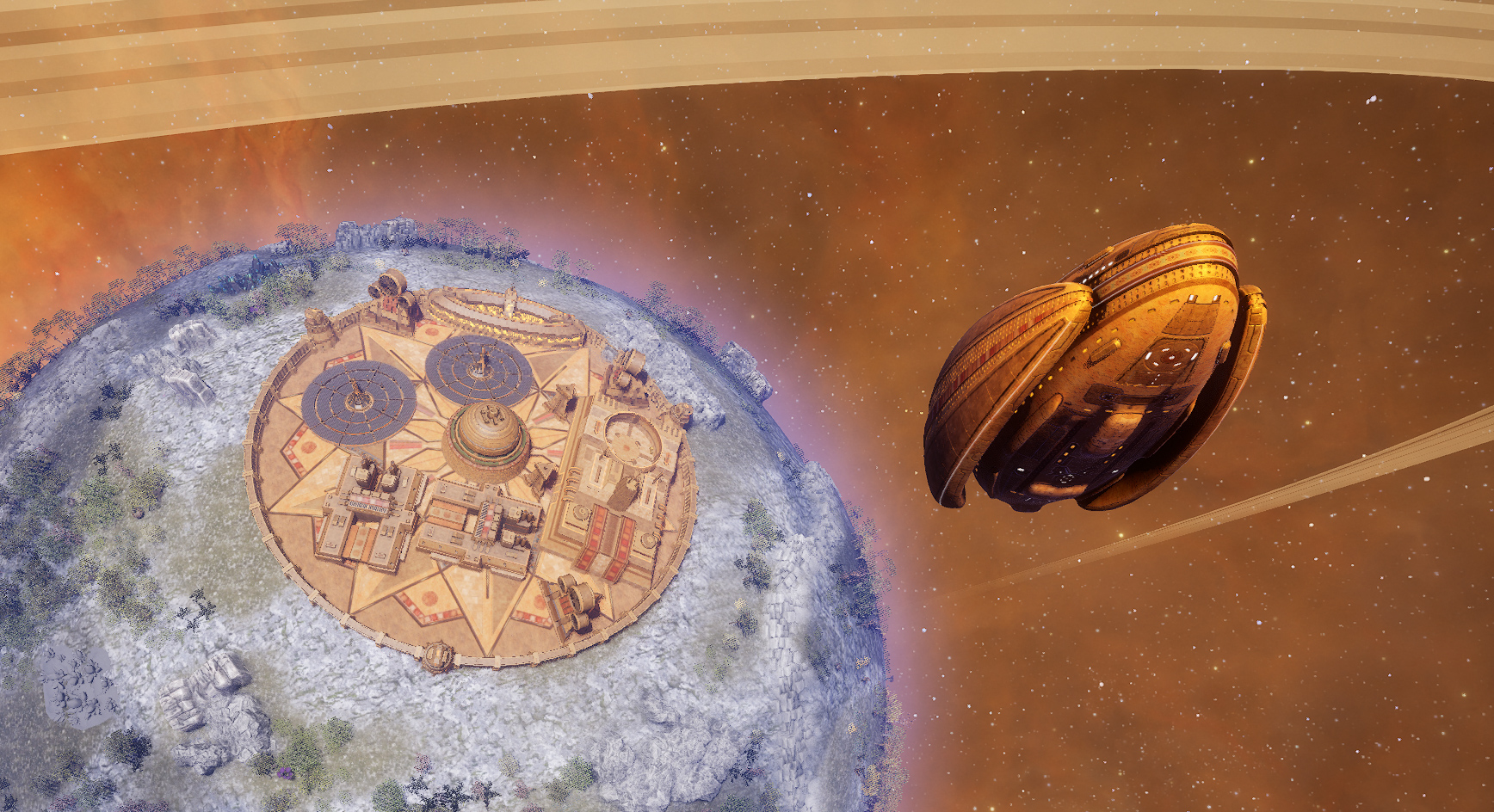
Gameplay Insights #6: The Four X’s, in the Order You’ll Live Them
Greetings, Astra Odysseans!
An honest note to start: we’ve been buried in balance passes and tooltips for weeks. It’s not the glamorous side of game development, but it’s what turns big systems into a playable game, and it brings the beta closer every day.
Now, to today’s topic. In our previous updates, we explored the six strategy pillars of Beyond Astra, the diversity of its planets, and your cities. This time, let’s walk through how a game actually unfolds: the four X’s, in the order you’ll live them.
For decades, the grand space 4X has carried a giant-spreadsheet reputation: brilliant, deep, slow to tame. Beyond Astra was born from a simple intent: keep the four X’s and their depth, and make a game you read on the surface of its planets before you ever read it in a menu.
eXplore
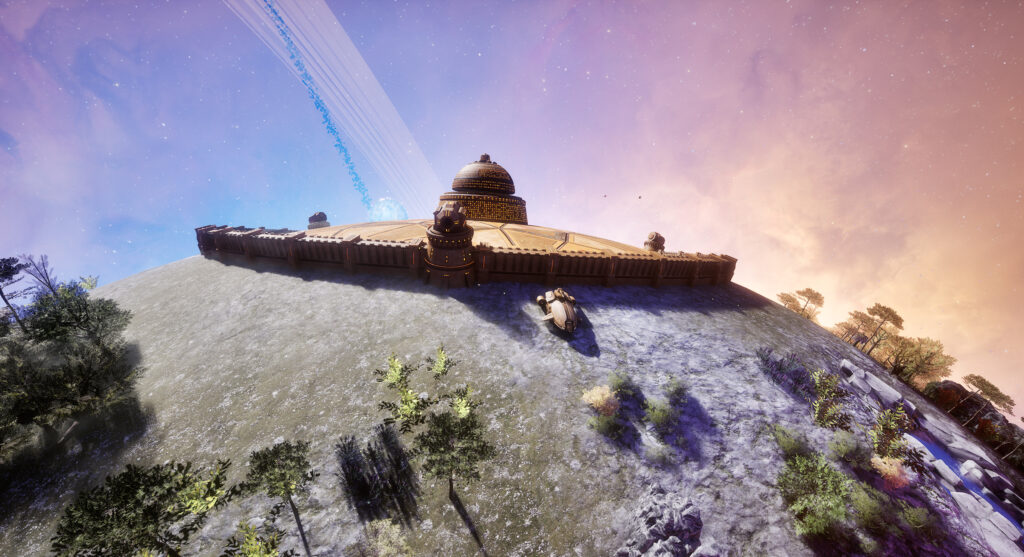
You start with one city and one Pioneer, on an almost unknown world. Your Pioneer holds the most important job in the game: going out to discover. Ruins, wildlife, a strange deposit two valleys over. Every analysis produces Exploration Points, Exploration Points become Knowledge, and Knowledge is what technologies cost.
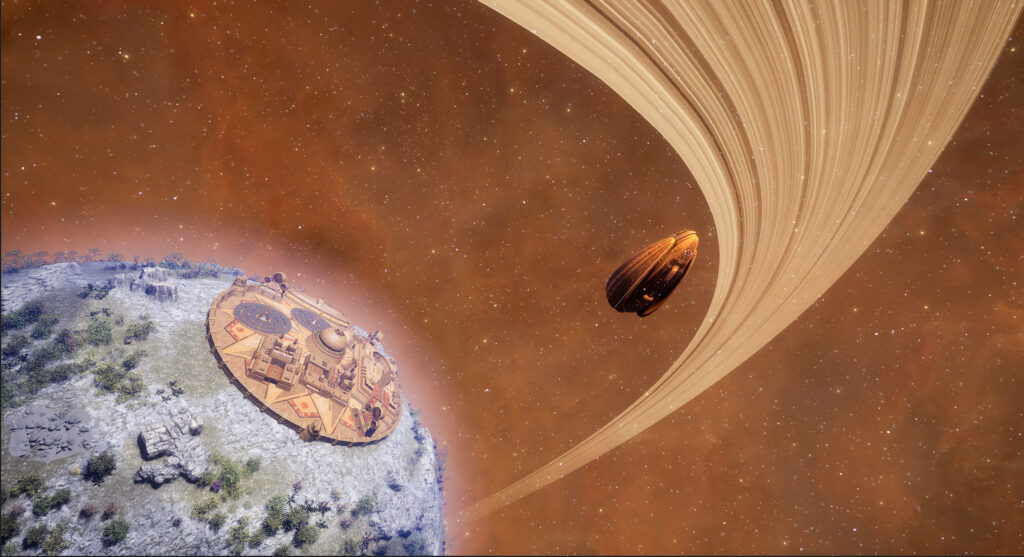
Then, space. Movement there is free: no route is ever forced on you. The lanes that exist are lanes you build yourself, for your trade; your ships can ride them for speed, or leave them at will. Space has real terrain of its own: paths that use the gravity of stars and planets to pick up speed. And the void between the stars isn’t empty either: nebulae slow ships down and wear them out, they shelter their own fauna, and a unit hiding inside sees out without being seen.
With planetary and space gameplay woven together, the wonder of science fiction lives on both sides of the sky.
eXpand
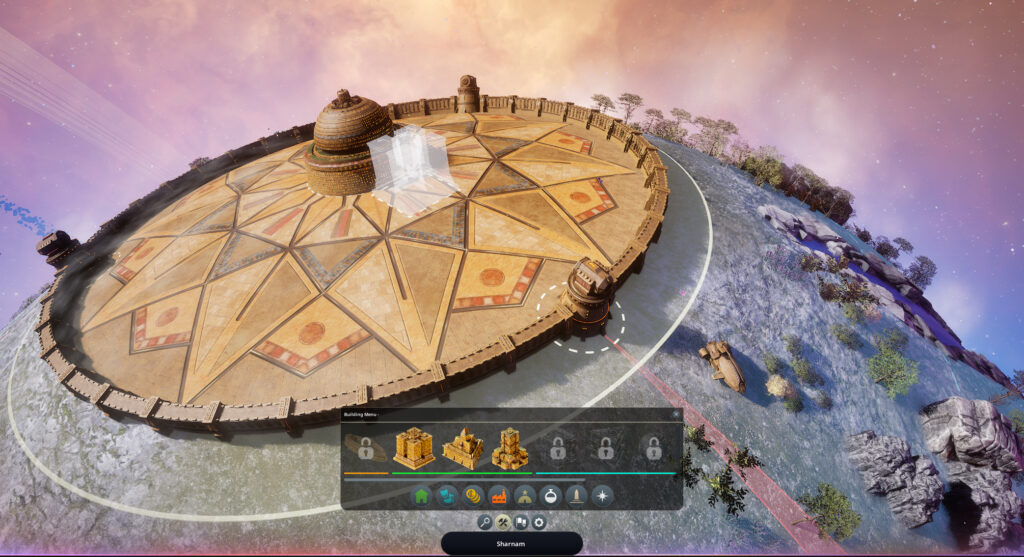
Every civilization starts from the same line: a race from zero. Your first hour sets the tone: meet your population’s needs, found a second city with a Command Center, produce your first Space Pioneer. Then follow it through liftoff, seamlessly, all the way to your first colony beyond your cradle.
As the galaxy fills up, the game shifts: choices pile up, gaps widen, and what began as a pure 4X slides into grand strategy, where no two civilizations play alike. That divergence starts at creation: every species and every civilization type follows its own logic, from the Silicic, who feed on minerals, to the Swarm and its insatiable hunger, to tireless robotic civilizations.
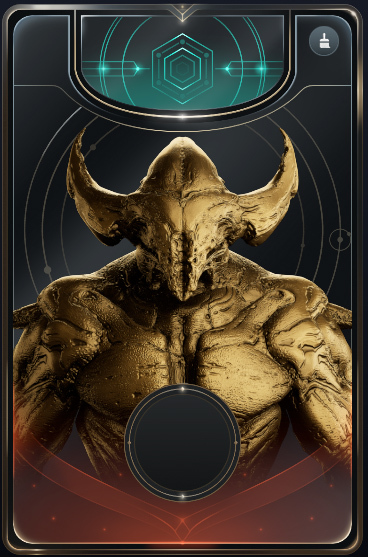
Species portrait (work in progress). Top: the evolutionary strategy. Center: the species portrait itself. The circle will hold the civilization-type symbol (empty for now, but coming soon). At the bottom, the color marks the climate.
Expanding means founding cities, colonizing planets, planting outposts on strategic ground. But not just anywhere: worlds have biomes, and a Floran (plant) people will struggle on a desert world until terraforming catches up with its ambition. A planet only holds a few cities (three to five depending on the world), so you decide what each one is for, and when the time comes, whether to found a new one or grow an existing one denser. Both paths are meant to work, they just ask different questions. A dense city is mighty, but it is also a single, very precious target. And settling a hostile world condemns nobody to live there: workers can commute by shuttle from a neighboring world that suits your people, while the forges burn under the ash.
We built Beyond Astra around that very specific 4X feeling: the deep satisfaction of starting with a single city and building, hour after hour, an empire whose armies can raze entire star systems. We want that evolution to feel palpable and rewarding.
eXploit
Resources sit where they sit: this deposit, in that valley, on that world. You raise an extractor, it links to the nearest city, and the ore physically travels. Push the extractor past its renewal threshold and it produces more today, but it pollutes more, and the planet’s health pays the price. Your economy is something you build city by city, follow along a trade route, and defend. When something runs short, there is a place on the map where that problem lives.
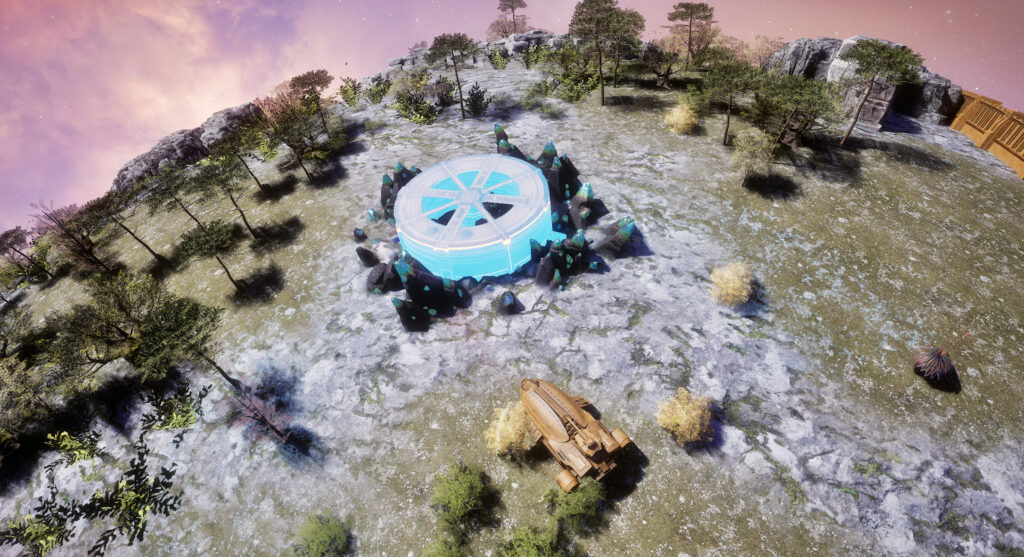
Which leaves the genre’s other reputation: micromanagement. We won’t pretend it vanishes; an empire this physical still asks for hands-on attention. But it’s a trade we embrace: that attention lands on tangible things, a city, an extractor, a route on the map, not on numbers buried three menus deep. And the game shoulders the routine: city templates carry your know-how from world to world, population assigns itself to jobs, extractors link themselves, construction can be planned ahead, and a filterable Manager surfaces what actually needs you. Because the real strategic pleasure is the big picture: balancing growth, happiness, science and an army’s upkeep, then watching a long-term plan come true.
The civilization that once counted its first ore shipments can end the game raising megastructures: Habitat Rings in orbit, a Dyson Swarm drinking the light of its own sun, all the way to the Solar Beam, which turns that light into a weapon.
eXterminate
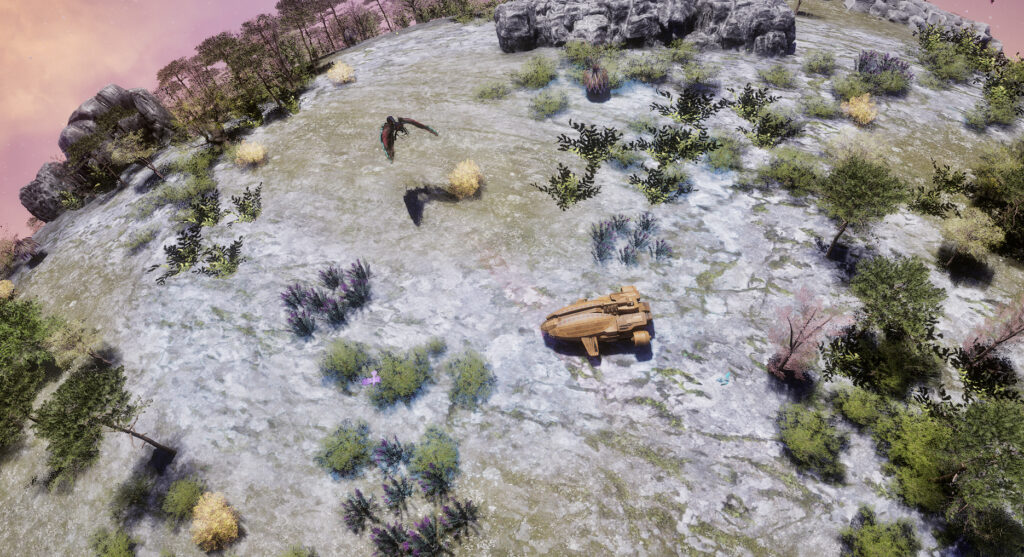
In many 4X games, the fourth X only truly arrives late, once the map is claimed and the borders freeze. Here, the action starts on your first planet: the local fauna gives the opening hours some teeth, on the ground and then in space. Sooner or later, expansion brings rival civilizations. This galaxy is full of life and dangers: megafauna, pirates, empires, threats quietly ripening. There is a challenge for every hour of the game, and each one you defeat grants experience and unique modules that no research can unlock.
All of it unfolds with no loading screens: the galaxy keeps living while you fight on the ground. Everything living at once doesn’t mean everything demanding you at once: active pause and alerts let every battle play out at your own pace.
Our goal with units is a fleet you can count, and count on: each ship has a class, a role, a name, and a story by the end of the game. You unlock hulls and technologies, but you outfit your ships yourself. Six classes cover each other’s weaknesses, and we want every class to shine from the first hour of the game to the last.
And extermination is only one of six ways to lead the galaxy: Science, Culture, Religion, Economy, Diplomacy, or War.
How a game ends
The galaxy doesn’t freeze while you cross the finish line: victories are about undisputed leadership, and your rivals can contest yours while you hold it. If one of them claims a victory before you do, the choice is still yours: acknowledge it, or fight on and reach your own. Then, the victory screen itself asks you a question. You can leave, triumphant, the moment you’ve won. Or you can stay and reach for an Ascension: destinies that carry a civilization further than victory. Choose that path, and the game stops being polite: the whole galaxy grows stronger, and the hardest act begins after the win, right where a game usually ends.
That’s the journey ahead, and you can help us get there. If Beyond Astra speaks to you, wishlisting it on Steam is the single most helpful click you can give us: wishlists are what decide how far Steam carries a launch. And join us on Discord, where you’ll hear everything first, beta news included.
Toward Astra, and beyond!
Alex & Valentin